A destination wedding is, at its core, an ask. You are inviting people who love you to rearrange their schedules, apply for time off, coordinate international travel, and spend real money, all to watch you get married somewhere beautiful and far away. It’s extremely important that you take the steps to make planning and logistics easy for them.
When we say “easy,” we mean that every question is answered before it’s asked and every detail is communicated with care. Here is what your guests actually need to know, and when they need to know it, from a seasoned destination wedding planning team.
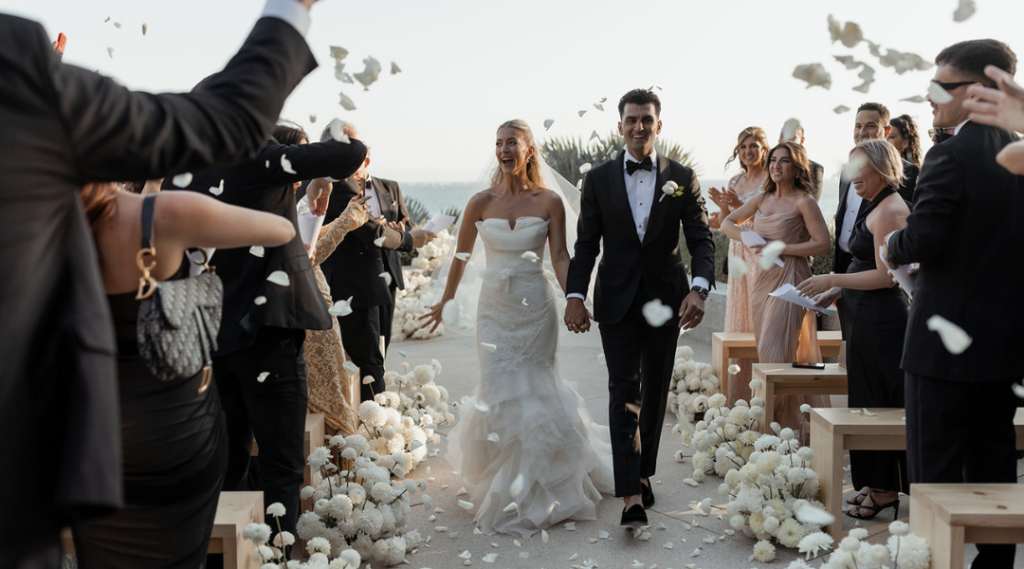
Start Earlier Than You Think
The standard save-the-date timeline for a domestic wedding, eight to ten months out, does not apply here. For a destination wedding, 12 months is the minimum. Eighteen months is better, particularly if your wedding falls during a high-travel season or requires guests to cross multiple time zones.
Your guests are not just clearing a weekend. They are booking international flights at the best available fare, requesting vacation days that may require manager approval months in advance, arranging care for children or pets, and in some cases applying for passports or travel documentation they don’t currently have. The earlier you give them the information, the more of them will actually be there.
Which brings up a statistic that’s worth considering: on average, destination weddings see 50% to 85% of invited guests attend, compared to 80% to 85% for local weddings. The gap closes significantly when guests receive ample notice and clear, organized communication. Your save-the-date and how you follow it up matter more than most couples realize.
The Invitation Is Doing More Work Than Usual
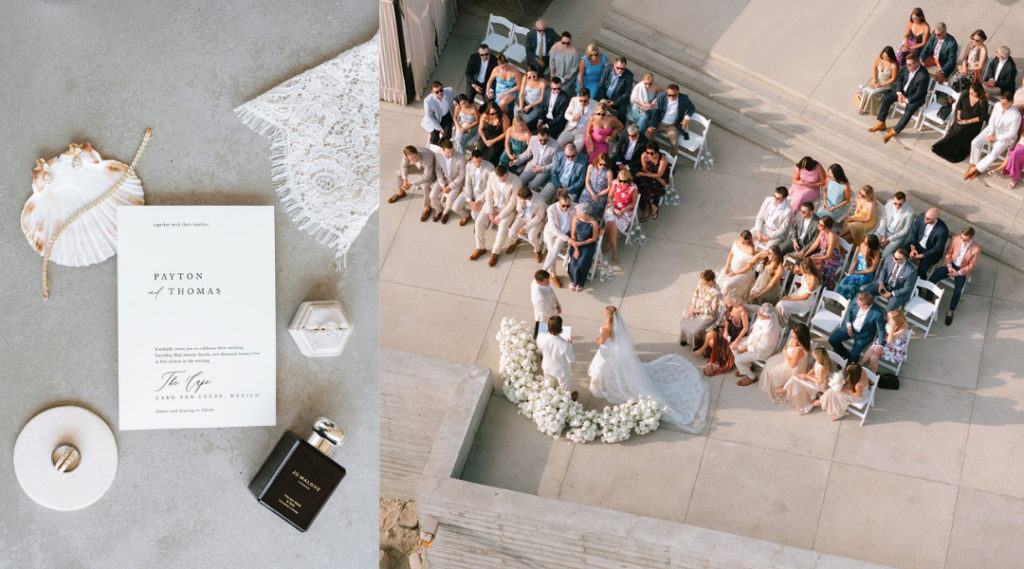
For a destination wedding, the invitation is not just a beautiful piece of paper announcing a date. It is the first official document your guests receive in relation to your special day, and it sets the tone for everything that follows.
Your invitation should include (at the very least) the full destination country, region, and the nearest major city or airport. It should communicate the general scope of the trip: is this a long weekend, a full week, a multi-day celebration? Guests need to understand what they are being invited to so they can make an informed decision about attending. Ambiguity at this stage leads to drop-offs and awkward conversations later.
A layered and detailed invitation still carries weight in this context. For a luxury destination event, it signals that this is not a casual affair, that they are being invited into something that has been thoughtfully planned, and that the experience will be well worth the journey.
Your Wedding Website Is Non-Negotiable
If your invitation is the announcement, your wedding website is the manual. And for a destination wedding, it needs to be actually useful, not just a pretty design with your engagement photos and a registry link.
Assume your guests have never been to this destination before. Because many of them haven’t.
That means your website should cover: the nearest international airports and approximate transfer times to the venue, whether guests need a visa or travel authorization to enter the country (and where to apply), what the local currency is and whether cards are widely accepted, what the weather will be like during the time of year you are marrying, health and vaccination recommendations if relevant, and a curated and interactive list of where to stay at a range of price points. Don’t just list the venue block, but also share alternatives for guests who want more flexibility.
It should also answer the questions your guests are too polite to ask. How formal is this wedding? What is the terrain like at the venue? Will they need to rent a car? Will there be outdoor elements? Is there a welcome dinner the night before, and is it hosted? Is the welcome dinner reserved for the entire wedding guest list or just the wedding party and family members? What happens the morning after? The more thorough you are here, the fewer panicked emails you receive three weeks out.
Provide Travel Tips
You can even take it a step further, especially if you are working with a local planner who knows the area. Provide a list of restaurants and shopping locations in the area, suggest nearby destinations for those who are planning to continue traveling after the wedding (many will!), and showcase other things to do in the area that guests can group up and experience together in the hours that they are not at an official wedding event. This could be a boat ride, a wine tasting, a hike, or something in that realm. After all, this is a once-in-a-lifetime trip for your guests, too.
Dress Code Communication Cannot Be Vague
“Formal” means something different at a beachfront resort in Mexico than it does at a château in Tuscany. “Black tie” in 95-degree humidity is a practical problem, not just a style choice.
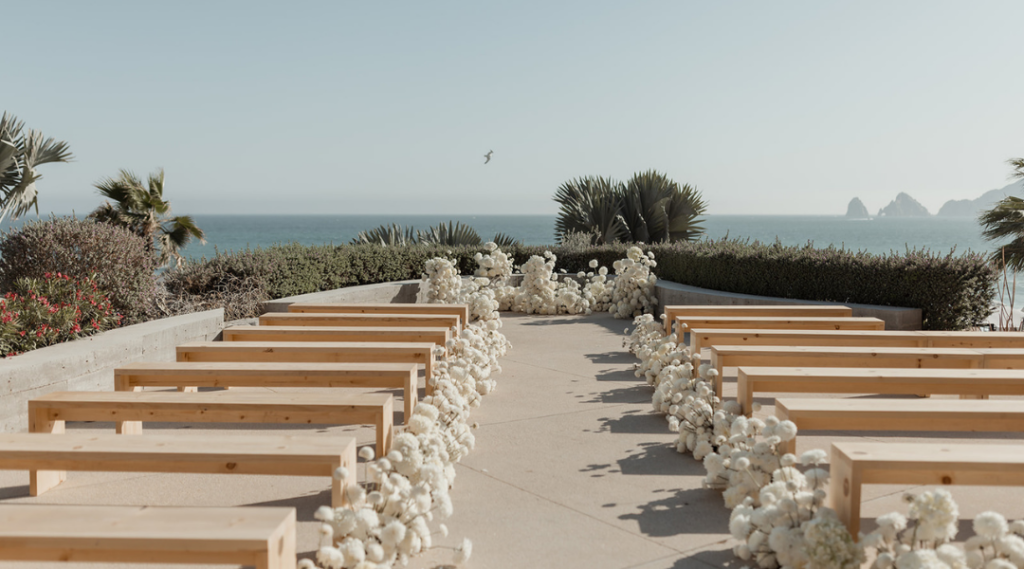
Be specific. If the ceremony is on sand or cobblestone, say so. Heels may not be practical, and your guests deserve to know. If the reception moves outdoors after dinner, mention it. If you want color or a specific palette, say that too. Destination weddings often have dress codes that are more nuanced than a single label can capture, and the guests who feel most at ease are always the ones who were told exactly what to expect. There’s nothing worse than showing up to an event thinking you might have worn the wrong thing.
Host the Full Experience, Not Just the Wedding
Your guests have traveled for this. The wedding itself is one evening. What surrounds it, like the arrival, the days before, the morning after, is the actual trip they will remember.
The best destination weddings feel hosted from beginning to end. That means a welcome note or small gift in their room on arrival. It means a group dinner the night before, even if informal. It means a loose plan communicated in advance so guests can decide how much or how little they want to participate.
You do not need to plan every moment of their trip. You just need to make sure they never feel like they traveled thousands of miles and then had to figure it out alone.
Karla Casillas & Co. plans luxury destination weddings in Los Cabos and around the world. If you are in the early stages of planning, we would love to hear about your vision.


Be the first to comment