What a Destination Wedding Planner Actually Does
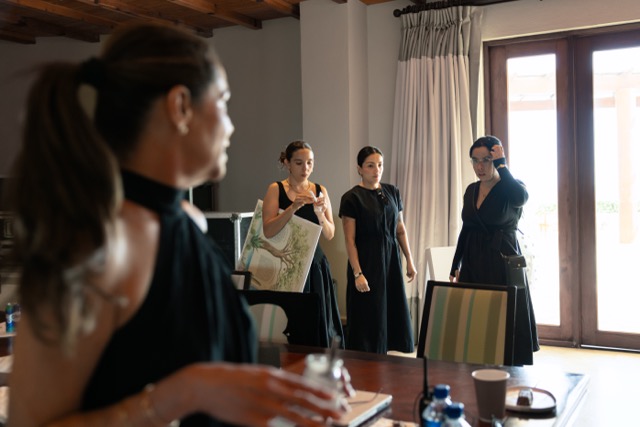
A destination wedding asks you to make two decisions at once. You are choosing a marriage, and you are choosing a place to begin it. Most of the planning industry treats the second decision as a logistics problem to be solved at a distance. I have spent more than twenty years treating it as a design problem to be authored, first on the coast of Baja California Sur, Los Cabos, and, increasingly, in Mexico City and Mérida.
The phrase destination wedding planner covers an enormous range of people. At one end is a coordinator who books the vendors you find and shows up the week of the wedding. At the other is a studio that designs the weekend, produces it in house, and carries every detail so that you can arrive as a guest at your own celebration. Both are sold under the same two words. The difference between them is the entire experience.
This guide is for the couple who has decided they want to marry somewhere beautiful and is now trying to understand what kind of help they actually need. I have written it the way I would explain it across a table, not the way the industry tends to sell it.
What a destination wedding planner does
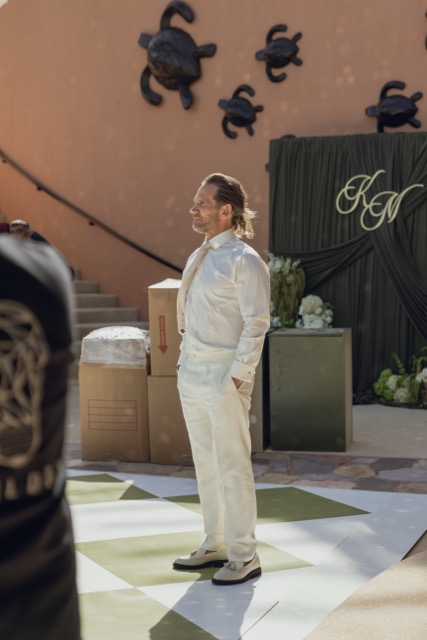
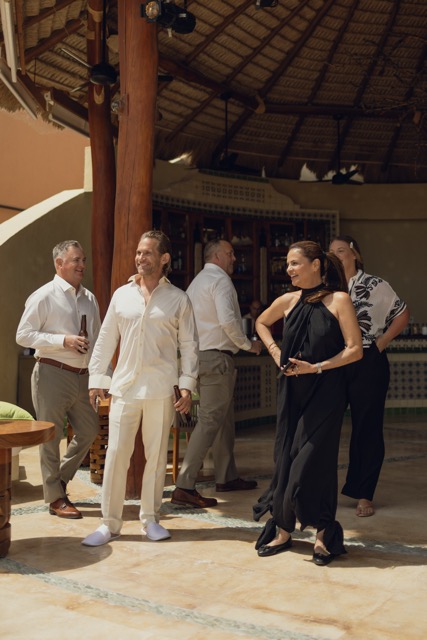
A destination wedding planner is the person who holds the whole weekend in her head so that no one else has to. That is the honest definition. Everything else is detail.
In practice the work falls into a few territories. There is the place itself: the venue, the contracts, the rhythm of a multi-day weekend, the way light moves across a terrace at the hour you intend to say your vows. There is design: palette, florals, table, the choreography of how an evening unfolds. There is production: the unglamorous infrastructure of power, sound, transport, timing, and the dozens of decisions that a guest should never notice because they were made correctly. And there is the human layer, which is the part the industry rarely names: the planner who understands that a wedding carries meaning for families, and who protects that meaning under pressure.
A planner working far from home adds one more skill to all of this, which is fluency. Fluency in the destination, in its vendors and its seasons, in the cultural texture that makes a Mexican wedding feel genuinely Mexican rather than imported. That fluency is not something a couple can build from another country in a year of planning. It is the reason the right planner is worth far more than the line item suggests.
Why couples work with a planner
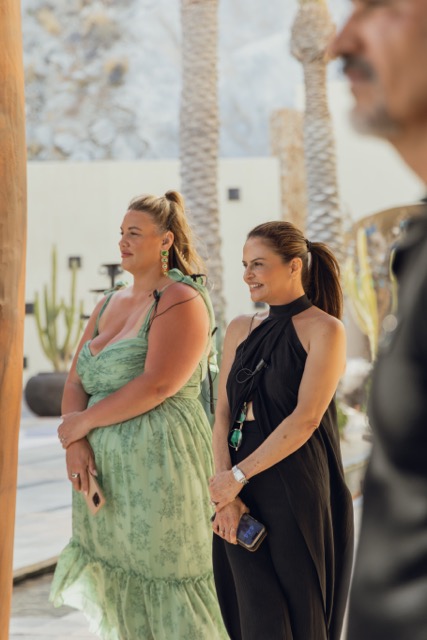
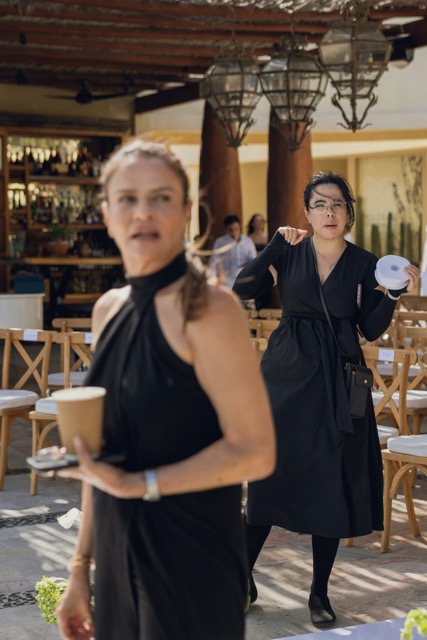
The reason most often given is stress, and it is true as far as it goes. A good planner absorbs the logistics so a couple can stay present. But that framing undersells the real benefit.
The point of working with an experienced studio is not that you avoid stress. It is that you get to be a guest at your own wedding. You walk into the welcome dinner without knowing whether the wind shifted the floral plan that afternoon, because it was handled before you arrived. You dance at the reception without watching the clock, because someone else is running the timeline to the minute. That is a different quality of experience than simply having help.
There are concrete advantages underneath that. Access, for one: the right studio opens doors to venues and artisans a couple would not find on their own, and to relationships with luxury hospitality partners built over many years rather than booked for one night. Stewardship of the budget, for another. An experienced planner does not promise to make a destination wedding cheap. She promises to make every peso intentional, and to tell you the truth about what things cost before you fall in love with a number that was never real.
Phases, not packages
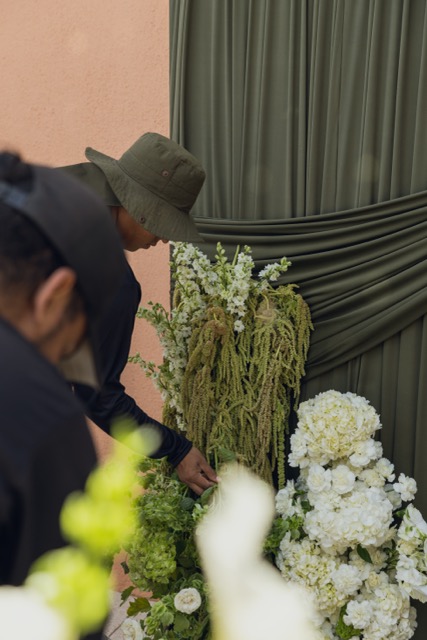
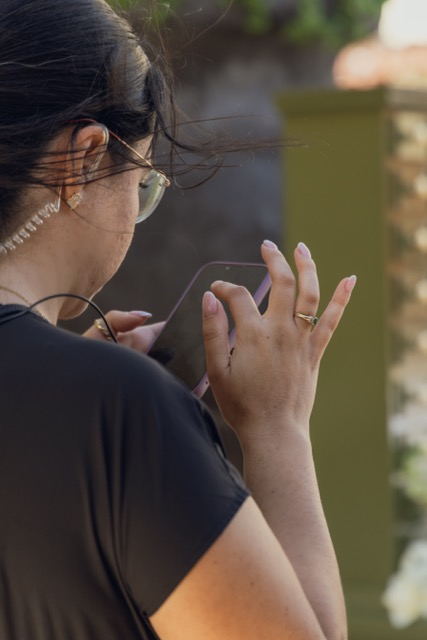
Here is where an experienced studio diverges most sharply from the industry standard, and it is worth understanding before you sign anything.
Most planners sell levels of service. A bronze, a silver, a gold. The couple is asked to choose how much planning they want at the very start, before they understand what the weekend will require. We do not work that way. We work in phases, because that is how planning actually moves.
A couple who has already chosen their venue and their date is ready for Full Planning, the comprehensive engagement in which the studio designs and produces the entire weekend. But a great many couples come to us earlier than that. They are still comparing venues across Mexico, drawn to Los Cabos but curious about Mexico City or Mérida, and they are not ready to commit to a full engagement. For them, we offer venue selection as its own phase. We help them find and secure the right setting, with honest counsel about what each venue can and cannot do, and no pressure to continue beyond it. When they are ready, that work flows naturally into Full Planning. When they are not, they leave with a venue chosen well.
The distinction matters because it reflects respect for where a couple actually is. A phase meets you at your current decision. A package asks you to predict decisions you have not yet made.
The same discipline carries through to the wedding itself. In our studio, design and production are authored across months, and then a dedicated wedding coordinator executes the planned timeline on the day, to the minute and to the letter. The planner composes the weekend. The coordinator runs it. That separation of roles is not a luxury. It is what allows the plan to survive contact with a real wedding day, when fifty small things shift, and someone has to hold the line so that the couple never feels it. *Karla Casillas
What the work actually includes
The services list of a destination wedding planner reads long: venue selection and contract negotiation, vendor sourcing and management, guest travel and accommodation, ceremony and reception design, legal and cultural navigation, itineraries for the couple and their guests. All of it is real.
But the more useful question is not what appears on the list. It is who performs the work. A studio that designs and produces in house controls the quality of what it delivers, because the florals, the design, and the production are its own. A planner who brokers every element from outside vendors is coordinating other people’s work and hoping it aligns. Both can produce a beautiful wedding. Only one of them is accountable for every layer of it. When you read a services list, the question to ask is how much of this is yours, and how much are you simply booking on my behalf.
How to choose the right planner
The industry likes to sort planners into types: boutique, luxury, cultural, eco. Those labels are marketing. The distinction that will actually shape your experience is simpler. Is this person coordinating a wedding, or authoring one? Are they executing your decisions, or are they capable of making decisions you would not have known to make?
Look at the portfolio, and look at it carefully. A strong portfolio shows range and consistency, the same hand visible across very different weddings. Read how the planner talks about the work. A coordinator describes logistics. An author describes intention, the why behind a choice, the relationship to a place built over years. Speak with past couples, and ask them not whether the wedding was beautiful but whether they felt held when something went wrong, because something always does.
Then talk about money openly, early, and without flinching. A planner who is vague about cost at the start will be vague about it later, when it matters more.
The questions worth asking
Before you sign with any destination wedding planner, ask these:
- Who, specifically, will run my wedding day, and have I met that person?
- How much of the work is produced in-house, and how much is outsourced?
- How do you handle the moment when something goes wrong on the day?
- Can you show me weddings you have produced at the venue I am considering?
- Will you tell me honestly when an idea will not work, or when a budget is unrealistic?
The answers will tell you more than any package description. You are not hiring a vendor. You are choosing the person who will protect the most important weekend of your life with a team and systems that know the best outcome for our clients.
Planning across Mexico
Los Cabos is where this studio’s authority is deepest. More than two decades of weddings on this coast means relationships, judgment, and a fluency with the landscape that cannot be improvised. But Mexico offers more than one extraordinary setting for a wedding, and couples increasingly want to understand their options before they commit.
This is exactly where the venue selection phase earns its place. A couple drawn to the desert meeting the sea in Los Cabos, the colonial architecture and gastronomy of Mexico City, or the limestone light of Mérida and the Yucatán does not have to choose blind. The right studio can guide that comparison with honesty about what each region does well, and then produce the wedding once the choice is made. The destination is part of the design, not a backdrop to it.
On real weddings, honestly
You will read a great many planner guides that close with success stories. I would rather point you to the work itself. The weddings this studio has produced live in our portfolio and in The House Journal, documented with the couples’ first names, the real venues, and the artisans who made them, credited by name. That is the only proof worth offering. A planner’s past weddings, told truthfully, will tell you everything a testimonial cannot.
A few honest answers
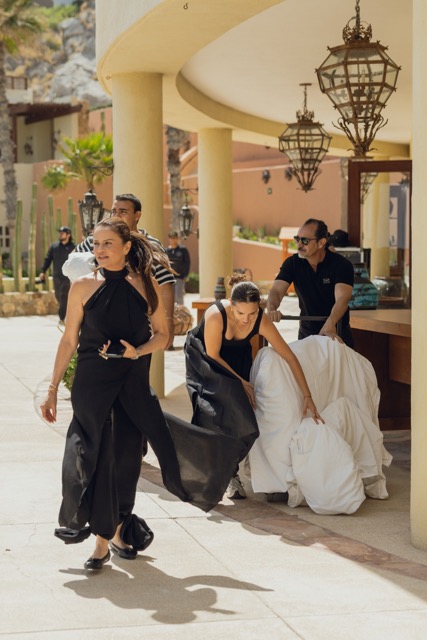
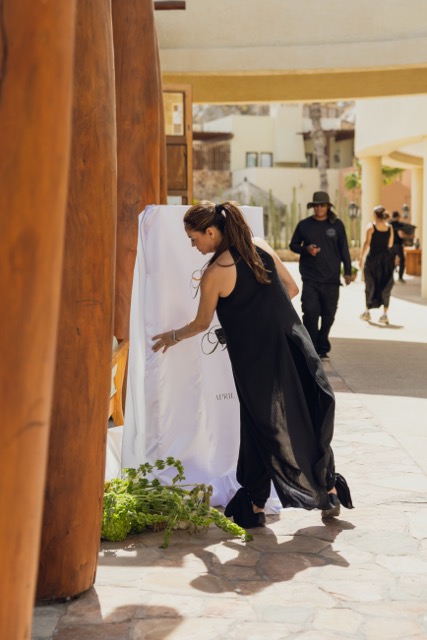
What does a destination wedding planner cost? More than the internet’s averages suggest, and more than the resort brochures imply. The truthful answer depends entirely on the scale of the celebration and the level of design. Any planner who quotes you a number before understanding your weekend is guessing.
How does vendor coordination work? A studio with in-house production coordinates very little, because it produces the core of the wedding itself. The rest is managed through long-standing relationships rather than cold bookings, which is what makes coordination feel seamless rather than fragile.
When should we start? Earlier than you think, particularly if you are still choosing among venues. The best settings book twelve to eighteen months out, and the venue selection phase exists precisely so you can begin before you are ready to commit to everything else.
A destination wedding is not a product to be purchased in tiers. It is a weekend to be authored by someone who has done it enough times to know where the difficulty hides and how to keep it away from you. At Karla Casillas & Co., that is the whole of the work: to carry the weight so completely that, on the day itself, you forget there was any weight at all.
The House Journal is the editorial of Karla Casillas & Co.
With Care,
Karla Casillas



Be the first to comment